
Polished Concrete vs Coatings: Which Is Right for Your Facility?
- One of the most common decisions facility managers face is whether to install mechanically polished concrete or a floor coating system such as epoxy or urethane. While both solutions can perform well in commercial environments, they serve different operational needs.
- Polished concrete is a permanent modification to the slab, while coatings function as a layer applied to the surface.
Lifecycle Performance Comparison
When evaluating flooring systems for a commercial building, lifecycle cost is often more important than initial installation price.
Polished Concrete
Uses the existing slab as the finished surface
No coating layer to delaminate or peel
Extremely long lifecycle when properly maintained
Requires periodic burnishing rather than resurfacing
Epoxy or Coating Systems
Provide chemical resistance and decorative finishes
Can hide slab imperfections
May require recoating every 5–10 years, depending on traffic
Surface damage typically requires repair or resurfacing
For facilities prioritizing long-term durability and minimal maintenance, polished concrete often provides the lowest lifecycle cost.
Maintenance Cycles
Maintenance requirements vary significantly between polished concrete and coatings.
Polished concrete floors typically require:
routine dust mopping
wet mopping with neutral cleaners
occasional burnishing to maintain gloss
Coatings generally require:
periodic reapplication
patching or repairs when damaged
potential shutdowns for resurfacing
In large facilities such as warehouses or distribution centers, these maintenance differences can translate into substantial operational savings over time.

Downtime Considerations
Operational downtime is a critical factor for many commercial buildings.
Polished concrete installation is performed through mechanical grinding and polishing, which can often be staged in phases to minimize disruption. Once the polishing process is complete, floors can typically return to service immediately.
Coatings, on the other hand, often require curing periods that can delay facility operations.
For 24-hour operations or logistics environments, this difference can significantly affect project planning.
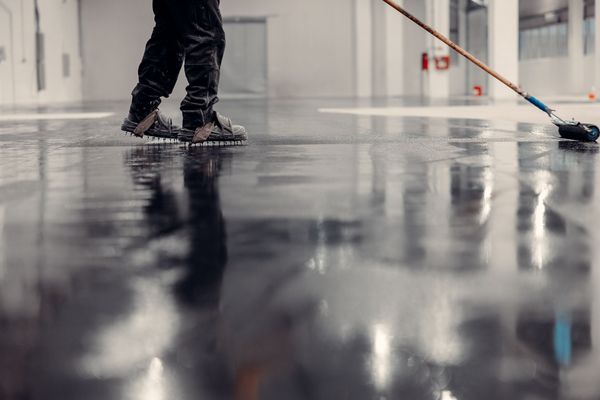
Slip Resistance and Safety
Modern polished concrete systems are engineered to meet safety requirements through the Dynamic Coefficient of Friction (DCOF) standards.
Despite its glossy appearance, properly polished concrete can achieve slip resistance comparable to many commercial flooring systems when maintained correctly.
Coatings may also incorporate slip-resistant aggregates, but surface wear over time can affect performance.
When Polished Concrete Is the Best Choice
Polished concrete is typically the preferred solution for:
warehouses and distribution centers
retail big-box environments
educational facilities
municipal buildings
showrooms and commercial interiors
Coatings may be better suited for environments requiring extreme chemical resistance, waterproofing, or decorative color systems.