
Bathroom Tile vs Polished Concrete for Commercial Restrooms
Commercial restrooms are one of the most demanding environments for flooring systems. These areas experience constant moisture exposure, heavy foot traffic, frequent cleaning, and strict hygiene requirements.
Two flooring systems commonly used in commercial restroom environments are tile flooring systems and polished concrete floors.
Each solution offers distinct advantages depending on the building type and maintenance strategy.

Tile Flooring for Commercial Bathrooms
Tile has traditionally been the most common flooring material used in commercial restrooms because of its water resistance, durability, and design flexibility.
Porcelain tile is particularly popular in modern restroom installations because it resists moisture penetration and withstands harsh cleaning chemicals used in sanitation routines.
Advantages of tile flooring in commercial bathrooms include:
Excellent water resistance
Slip-resistant surface textures
Wide range of aesthetic styles
Easy replacement of damaged tiles
Compatibility with wall tile systems
Tile systems also allow designers to integrate drainage slopes, coved base tile, and waterproof membranes, which are important for maintaining sanitary environments.
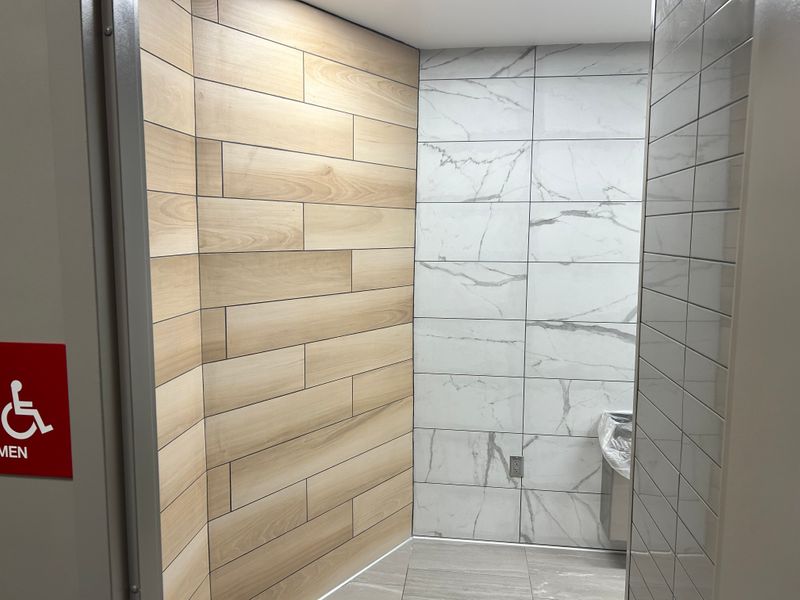
Polished Concrete for Commercial Bathroom Floors
Some modern commercial facilities are choosing polished concrete flooring in restroom areas as part of a minimalist architectural design.
Polished concrete offers several advantages, including:
Extremely high durability
Minimal grout lines
Easy cleaning and maintenance
Seamless integration with surrounding concrete floors
However, polished concrete may require specialized sealers and slip-resistant treatments to ensure safe performance in wet environments.
Because concrete is porous by nature, proper sealing is essential to prevent moisture absorption and staining.
Hygiene and Maintenance Considerations
Restroom flooring must support strict cleaning protocols while also preventing bacteria and mold growth.
Tile floors contain grout lines that require regular cleaning and maintenance, while polished concrete floors have fewer joints where contaminants can accumulate.
However, modern grout technologies and antimicrobial sealers have significantly improved the long-term cleanliness of tile flooring systems.
Facilities with dedicated janitorial programs often prefer tile systems because they provide greater control over drainage and slip resistance.
Which Flooring System Is Best for Commercial Bathrooms?
Both tile and polished concrete can perform well in commercial restroom environments when installed properly.
Tile flooring is typically the preferred option for:
Restaurants
Hotels
Healthcare facilities
Retail centers
Office buildings
Polished concrete may be selected for:
Industrial facilities
Warehouses with restroom areas
Modern architectural environments
Facilities seeking seamless flooring transitions
The most important factor is ensuring the flooring system is installed by experienced commercial flooring contractors who understand moisture management, substrate preparation, and long-term durability requirements.
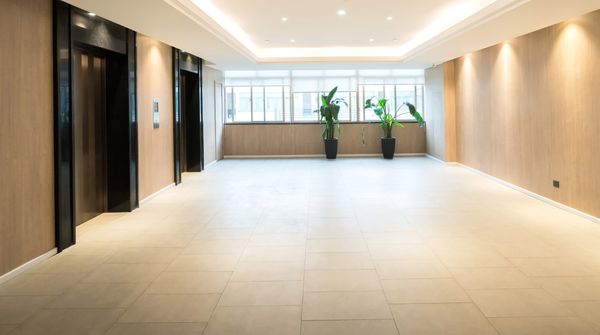
Professional Hard Stone & Tile Installation for Commercial Buildings
Commercial tile installation requires specialized expertise in substrate preparation, waterproofing systems, crack isolation membranes, and large-format tile installation techniques.
Ground Floor Contractors works with developers, facility managers, and general contractors to install durable, high-performance stone and tile flooring systems designed for long-term commercial use.
Our team installs tile systems in environments such as:
Corporate offices
Retail stores
Hospitality properties
Healthcare facilities
Public buildings
Educational campuses
Proper installation ensures the flooring system performs reliably for decades while maintaining the aesthetic and functional requirements of the space.