
Commercial Hardwood vs Resilient Flooring
Commercial property owners often compare hardwood flooring and resilient flooring systems when planning new construction or renovation projects.
Both materials serve very different purposes, and the right choice depends on the building’s function, traffic levels, maintenance expectations, and design goals.
Understanding the differences between these flooring systems helps facility managers make informed long-term decisions.
What Is Resilient Flooring?
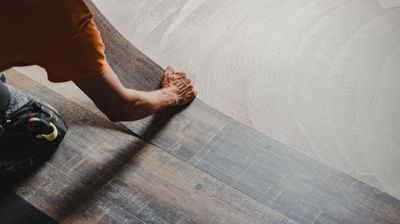
Resilient flooring refers to flexible flooring materials designed to absorb impact and provide durability under heavy traffic.
Common commercial resilient flooring products include:
Luxury vinyl tile (LVT)
Vinyl composition tile (VCT)
Rubber flooring
Sheet vinyl flooring
Linoleum
These materials are engineered for high durability, moisture resistance, and easy maintenance, making them extremely common in institutional environments.
Resilient flooring is widely used in:
Hospitals and healthcare facilities
Schools and universities
Grocery stores and supermarkets
Government buildings
Industrial environments
Because these materials resist moisture and staining, they perform well in spaces that require frequent cleaning.
Aesthetic and Design Considerations
Hardwood flooring remains one of the most desirable flooring materials from a design perspective.
Real wood surfaces create a sense of warmth, quality, and craftsmanship that synthetic materials often struggle to replicate.
Commercial environments that prioritize aesthetics frequently choose hardwood for spaces such as:
Retail showrooms
Boutique stores
Hospitality spaces
Corporate offices
Restaurant dining areas
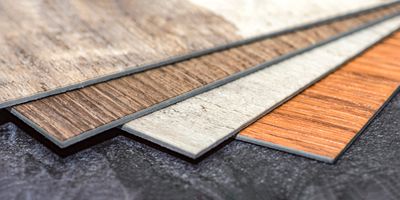
Resilient flooring products, particularly modern LVT systems, have improved significantly in appearance and can mimic wood textures. However, they typically do not deliver the same natural variation and depth found in genuine hardwood.
Durability and Traffic Performance
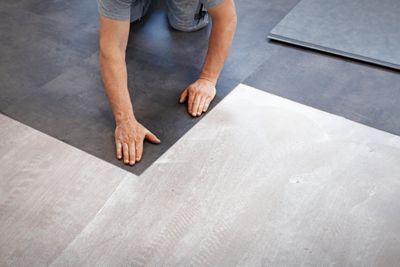
Resilient flooring is often selected when maximum durability and minimal maintenance are the primary goals.
Vinyl and rubber flooring can withstand extremely heavy traffic and resist scratches, stains, and moisture damage. These materials also perform well in environments where rolling loads such as carts and equipment are common.
Hardwood flooring, while durable, requires more careful maintenance in high-traffic commercial environments.
Over time, hardwood floors may experience:
Surface scratches
Finish wear
Minor dents from heavy furniture
However, unlike resilient flooring, hardwood floors can be sanded and refinished, restoring their appearance without complete replacement.
Maintenance and Lifecycle Cost
Maintenance requirements vary significantly between hardwood and resilient flooring.
Resilient flooring generally requires:
Regular sweeping and mopping
Occasional polishing or recoating
Replacement of damaged tiles
Hardwood flooring maintenance typically includes:
Routine cleaning
Periodic refinishing
Spot repairs
Although hardwood floors may require more specialized maintenance, their lifespan can exceed several decades, particularly when refinishing is performed periodically.
In contrast, many resilient flooring systems must be replaced after 10–20 years of heavy commercial use.
Moisture and Environmental Performance
Moisture and Environmental Performance
Resilient flooring systems offer superior moisture resistance compared to hardwood flooring.
For this reason, they are commonly installed in environments where water exposure is frequent, such as:
Healthcare facilities
Restrooms
Food service areas
Utility rooms
Hardwood flooring is better suited for dry interior environments where humidity and moisture can be controlled.
Choosing the Right Commercial Flooring System
Both hardwood and resilient flooring serve important roles in commercial construction.
Hardwood flooring is often chosen when:
Design and brand image are priorities
Long-term durability is desired
The space benefits from natural materials
Resilient flooring is typically selected when:
Moisture exposure is high
Maintenance must be minimal
Budgets are tightly controlled
Many commercial buildings ultimately incorporate both flooring systems, using hardwood in public or customer-facing areas while installing resilient flooring in back-of-house spaces.
Working with experienced commercial flooring installation contractors ensures the correct materials are selected for each area of the building