
Engineered vs Solid Hardwood in Commercial Installations
Commercial buildings place very different demands on hardwood flooring than residential environments. Retail stores, offices, restaurants, and athletic facilities experience significantly higher foot traffic, heavier furniture loads, and wider swings in temperature and humidity.
Because of this, selecting the correct type of hardwood flooring system is one of the most important decisions during the design and construction process.
Two primary options dominate commercial hardwood installations:
Engineered hardwood flooring and solid hardwood flooring.
While both offer the visual appeal of real wood, their internal construction and performance characteristics differ significantly.
Solid Hardwood Flooring in Commercial Spaces
Solid hardwood flooring is manufactured from a single piece of wood, typically ranging from ¾-inch thick planks made from species such as oak, maple, walnut, or hickory.
This traditional flooring system has been used for decades in applications such as:
Gymnasium floors
Dance studios
High-end retail environments
Historic building renovations
One of the biggest advantages of solid hardwood is its ability to be refinished multiple times over its lifespan. Because the material thickness is substantial, floors can be sanded and refinished repeatedly to restore appearance.
However, solid hardwood also comes with limitations in commercial environments.
Wood is a naturally reactive material, meaning it expands and contracts based on humidity and temperature changes. In buildings with inconsistent environmental control or slab-on-grade construction, this movement can lead to:
Cupping
Gapping
Warping
Surface cracking
For this reason, solid hardwood is typically recommended only when the building conditions are highly stable.
Engineered Hardwood for Commercial Installations
Engineered hardwood flooring was developed specifically to solve many of the structural challenges associated with solid wood flooring.
Instead of being milled from a single piece of lumber, engineered hardwood consists of multiple layers of wood veneers bonded together in a cross-laminated structure. The top layer is genuine hardwood, while the underlying layers provide dimensional stability.
This construction significantly reduces expansion and contraction caused by moisture.
As a result, engineered hardwood is often the preferred option for commercial environments such as:
Retail stores
Corporate offices
Hospitality spaces
Multi-story commercial buildings
Engineered flooring also allows installation over a wider variety of subfloor systems, including:
Concrete slabs
Plywood subfloors
Raised access flooring systems
Radiant heating systems
Because of these advantages, many architects specify engineered hardwood for commercial projects where environmental conditions cannot be perfectly controlled.
Moisture Considerations in Commercial Hardwood Flooring
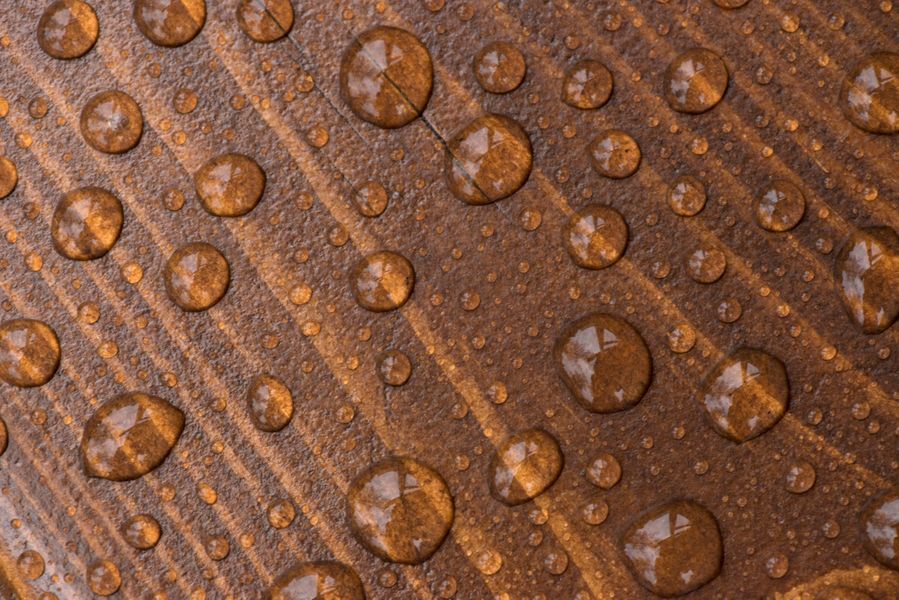
Moisture management is one of the most critical technical factors when installing hardwood flooring in commercial buildings.
Concrete slabs, in particular, can release moisture vapor long after construction is completed. Without proper mitigation, this moisture can migrate into wood flooring systems and cause long-term damage.
Professional commercial flooring contractors typically conduct moisture testing before installation, including:
Relative humidity testing inside the slab
Calcium chloride testing
Subfloor moisture analysis
If moisture levels are elevated, installers may recommend:
Moisture barrier systems
Adhesives designed for moisture control
Engineered hardwood instead of solid hardwood
Proper moisture management dramatically increases the longevity of commercial hardwood installations.
Traffic Load and Durability
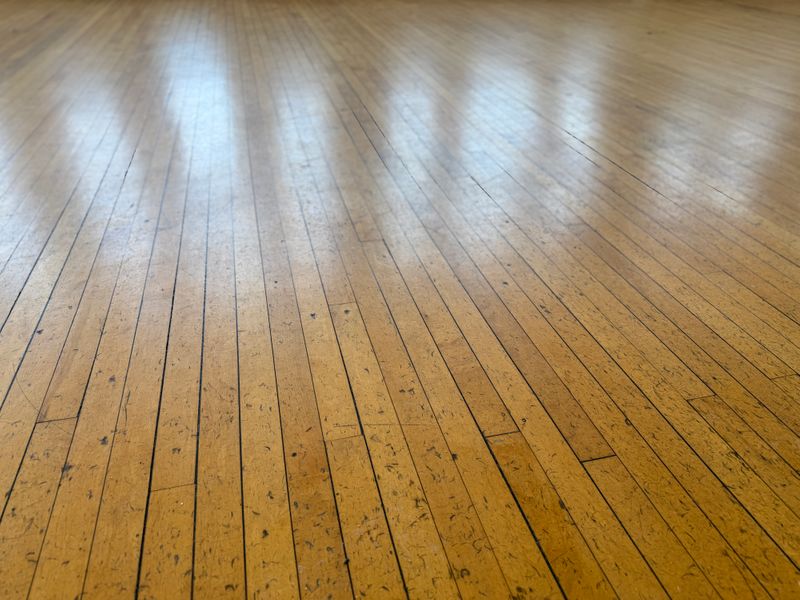
Commercial flooring systems must withstand far greater wear than residential installations.
High-traffic environments such as retail stores, shopping centers, and public spaces can see thousands of footsteps per day.
Durability considerations include:
Wood species hardness (Janka rating)
Finish system durability
Plank thickness and construction
Maintenance schedules
Harder species such as maple and oak are often specified for commercial applications because they resist denting and abrasion better than softer woods.
In many commercial projects, engineered hardwood paired with high-performance commercial finishes provides the best balance between aesthetics and durability.
When to Choose Engineered vs Solid Hardwood
The choice between engineered and solid hardwood ultimately depends on several project conditions.
Engineered hardwood is typically recommended when:
Flooring will be installed over concrete slabs
Moisture conditions are uncertain
Buildings experience seasonal humidity fluctuations
Multi-story construction is involved
Solid hardwood may still be the preferred option for specialized environments such as:
Gymnasium floors
Historic building restoration
Performance stages or dance floors
A qualified commercial flooring contractor can evaluate the building conditions and recommend the appropriate system.