
Moisture Mitigation Requirements for Resilient Flooring
One of the most common reasons commercial resilient flooring installations fail is excess moisture within the concrete slab.
Concrete naturally retains moisture after curing, and if that moisture migrates into the flooring system, it can cause:
adhesive breakdown
flooring bubbles or curling
mold growth beneath the flooring
premature flooring failure
For this reason, professional commercial flooring contractors always perform moisture testing before installation.
Ignoring moisture conditions is one of the leading causes of resilient flooring warranty failures.
Relative Humidity (RH) Testing
The most widely accepted method for measuring slab moisture is in-situ relative humidity testing, commonly referred to as RH testing.
RH probes are inserted into the concrete slab to measure internal moisture levels.
Industry standards such as ASTM F2170 provide guidelines for conducting RH testing before flooring installation.
Typical acceptable limits for resilient flooring installations are:
75–85% RH, depending on the flooring manufacturer
Specific adhesive systems may allow higher RH levels
If moisture exceeds these thresholds, additional mitigation measures are required before flooring can be installed.
Vapor Emission Testing
Another testing method used in commercial flooring installation is calcium chloride testing, which measures moisture vapor emission rates (MVER).
This test evaluates how much moisture vapor is escaping from the slab surface.
Common acceptable limits include:
3–5 pounds per 1,000 square feet per 24 hours
However, many modern flooring manufacturers now prioritize RH testing over calcium chloride testing because it more accurately reflects internal slab conditions.
Moisture Mitigation Systems
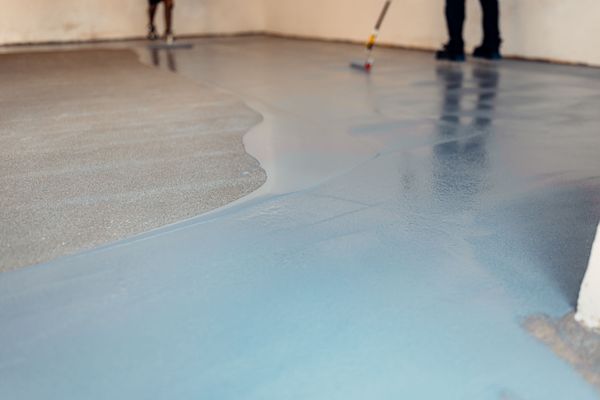
When excessive slab moisture is detected, contractors may install a moisture mitigation system before installing resilient flooring.
These systems help block moisture vapor from migrating into the flooring system.
Common moisture mitigation solutions include:
epoxy moisture barrier coatings
cementitious underlayment systems
moisture-blocking primers
self-leveling compounds with vapor control
Selecting the correct mitigation system depends on:
measured moisture levels
flooring material specifications
building usage
project timeline
Skipping this step can result in visible imperfections and premature flooring failure.
Resilient Flooring Systems for Hospitals, Schools, and Commercial Facilities
Resilient flooring systems are widely used across many commercial sectors due to their durability, hygiene performance, and cost efficiency.
Different facility types have unique flooring performance requirements.

Healthcare Facilities
Healthcare environments prioritize:
infection control
chemical resistance
seamless flooring systems
easy sanitation
Sheet vinyl and specialized healthcare LVT systems are commonly used in hospitals and clinics.

Educational Facilities
Schools require flooring that can withstand:
heavy foot traffic
rolling equipment
frequent cleaning
VCT has historically dominated this sector, but many districts are transitioning to LVT systems to reduce maintenance costs
Retail and Commercial Office
Retail stores and offices often prioritize:
aesthetic appearance
brand-consistent design
durability under foot traffic
easy maintenance
LVT has become a preferred solution due to its design versatility and long-term performance.
Why Work With Professional Commercial Resilient Flooring Contractors
Commercial resilient flooring installation is significantly more complex than residential flooring installation.
Professional contractors provide expertise in:
substrate preparation
moisture mitigation
manufacturer compliance
large-scale installation logistics
commercial safety and compliance standards
Experienced commercial flooring contractors ensure the flooring system is installed correctly the first time, helping facilities avoid costly failures or downtime.