
Stone vs Porcelain Tile for High-Traffic Commercial Areas
Selecting the right flooring material for high-traffic commercial environments requires balancing durability, maintenance requirements, safety, and long-term lifecycle cost. Two of the most common options used in commercial buildings are natural stone tile and porcelain tile.
Both materials deliver exceptional durability compared to many other flooring systems, but they perform differently depending on the type of facility, traffic levels, and maintenance program.
Understanding the strengths and limitations of each material helps property owners choose the best flooring system for lobbies, corridors, retail spaces, hospitality environments, and institutional buildings.
Natural Stone Tile in Commercial Spaces
Natural stone tile, such as granite, marble, limestone, and travertine, is often chosen for high-end commercial environments where aesthetics and architectural design are priorities.
These materials create a premium appearance that is difficult to replicate with synthetic flooring products. Many luxury hotels, corporate headquarters, universities, and government buildings use natural stone flooring in their entryways and public spaces.
Common characteristics of commercial stone tile flooring include:
Distinctive natural appearance with unique veining and color variations
Extremely high compressive strength, particularly with granite and quartzite
Long lifespan when properly maintained
Excellent heat resistance and thermal stability
However, natural stone typically requires more maintenance than porcelain tile. Most stone materials are porous and must be sealed regularly to prevent staining and moisture intrusion.
Stone flooring also requires experienced installers because improper substrate preparation can lead to cracking, shifting, or uneven surfaces over time.
Typical commercial applications include:
Hotel and hospitality lobbies
Corporate headquarters entryways
Government buildings
Museums and cultural institutions
High-end retail environments
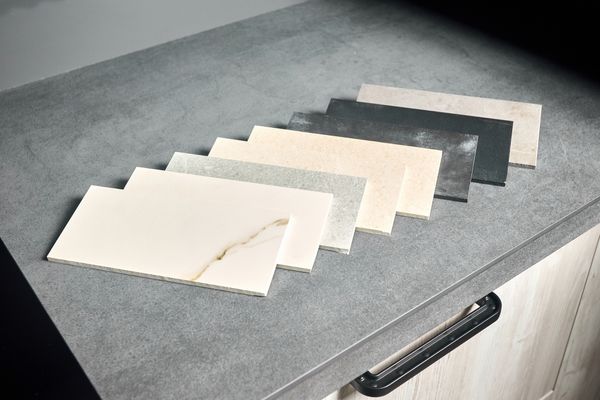
Porcelain Tile for High-Traffic Commercial Flooring
Porcelain tile has become one of the most widely used flooring materials in commercial construction because it combines durability, design flexibility, and low maintenance requirements.
Porcelain tiles are manufactured under extremely high heat and pressure, producing a dense material that is less porous and more stain-resistant than most natural stone options.
Modern porcelain manufacturing also allows tiles to mimic natural materials such as marble, slate, concrete, and wood, giving architects the design flexibility of natural materials without the same maintenance burden.
Advantages of porcelain tile in commercial buildings include:
Extremely low water absorption rate
High resistance to scratches and abrasion
Minimal sealing or maintenance requirements
Consistent color and texture across large installations
Slip-resistant surface options for safety compliance
Because of these properties, porcelain tile is commonly used in high-traffic commercial environments where durability and maintenance efficiency are critical.
Typical applications include:
Airports and transportation hubs
Shopping centers and retail stores
Hospitals and healthcare facilities
Office buildings
Restaurants and hospitality environments
Large-Format Tile in Modern Commercial Design
Many modern commercial spaces use large-format porcelain tile, which can range from 24" × 24" to panels exceeding 48 inches.
Large tiles reduce grout lines, creating a cleaner visual appearance while also improving maintenance efficiency. Fewer grout joints mean less accumulation of dirt and moisture, which is particularly important in high-traffic public spaces.
However, large-format tile installations require specialized installation techniques, including advanced leveling systems and precise substrate preparation. Improper installation can lead to lippage (uneven tile edges) or structural cracking.
Professional commercial tile installation contractors ensure these large panels are properly installed to maintain both performance and visual quality.
Slip Resistance and Safety Considerations
Flooring safety is a major concern in commercial buildings, particularly in areas exposed to water, cleaning chemicals, or heavy pedestrian traffic.
Both stone and porcelain tile can be manufactured or finished with slip-resistant surfaces to meet safety standards.
Common slip-resistant tile finishes include:
Textured porcelain tile surfaces
Honed natural stone finishes
Anti-slip surface treatments
High-coefficient-of-friction tile options
Proper tile selection is particularly important in environments such as:
Hotel entrances
Commercial restrooms
Retail storefronts
Restaurant kitchens
Public building corridors
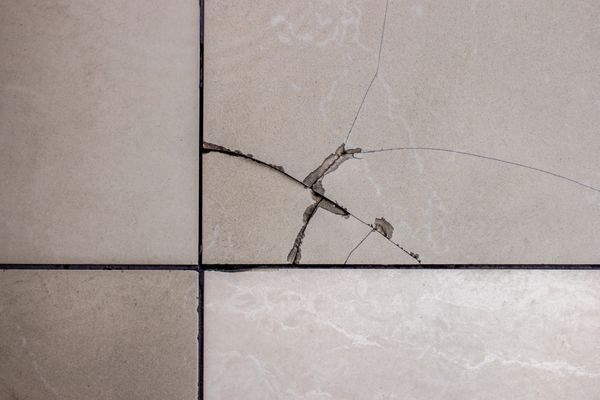
Preventing Tile Cracking with Crack Isolation Membranes
One of the most important steps in commercial tile installation is protecting the tile surface from substrate movement and structural stress.
Concrete slabs naturally expand, contract, and develop minor cracks over time. Without protection, these movements can transfer directly into the tile system and cause visible cracking.
Professional installers often use crack isolation membranes beneath the tile surface to absorb this movement.
Benefits of crack isolation membranes include:
Prevents reflective cracking from the concrete slab
Extends the lifespan of the tile installation
Improves structural stability of large-format tile
Protects against minor substrate movement
These membranes are particularly important in large commercial tile installations, where even small slab movements can impact large areas of flooring.
Which Tile Material Is Best for Your Facility?
Choosing between stone tile and porcelain tile depends on several factors, including design goals, expected traffic levels, maintenance capabilities, and project budget.
In general:
Natural stone works best for:
Luxury hospitality environments
High-end architectural projects
Decorative focal areas
Porcelain tile works best for:
High-traffic commercial spaces
Healthcare facilities
Retail stores
Office buildings
Areas requiring minimal maintenance
Working with experienced commercial tile installation contractors ensures the correct material and installation system are selected for long-term performance.