
Why Floor Failures Almost Always Start with Poor Preparation
Concrete is not a perfectly smooth or stable surface. Even new slabs contain laitance, moisture, curing compounds, and micro-fractures that can prevent flooring systems from bonding correctly.
When flooring systems are installed on improperly prepared concrete, several types of failures can occur.
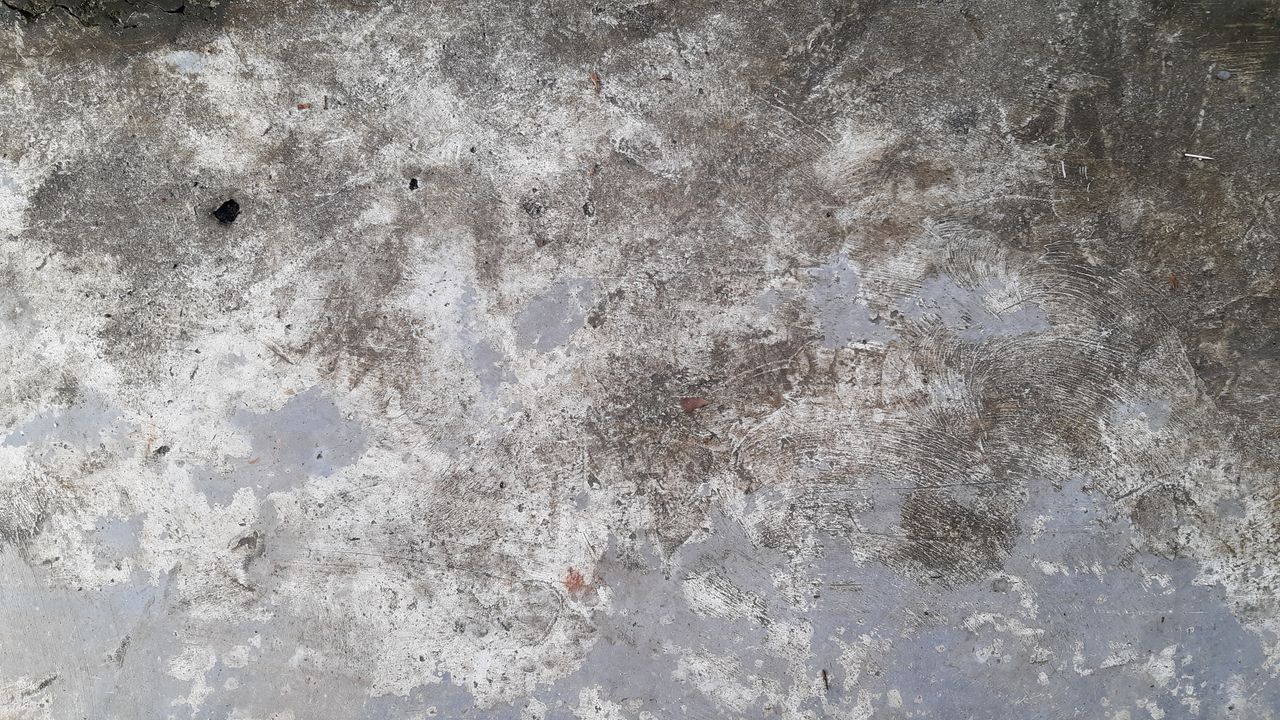
Adhesion Failure
Coatings such as epoxy or urethane require mechanical bonding to the concrete surface. If the slab is not properly profiled or contaminants remain on the surface, the coating may detach or peel.
Common causes include:
smooth concrete surfaces
leftover curing compounds
oils or chemical contamination
improper surface profiling
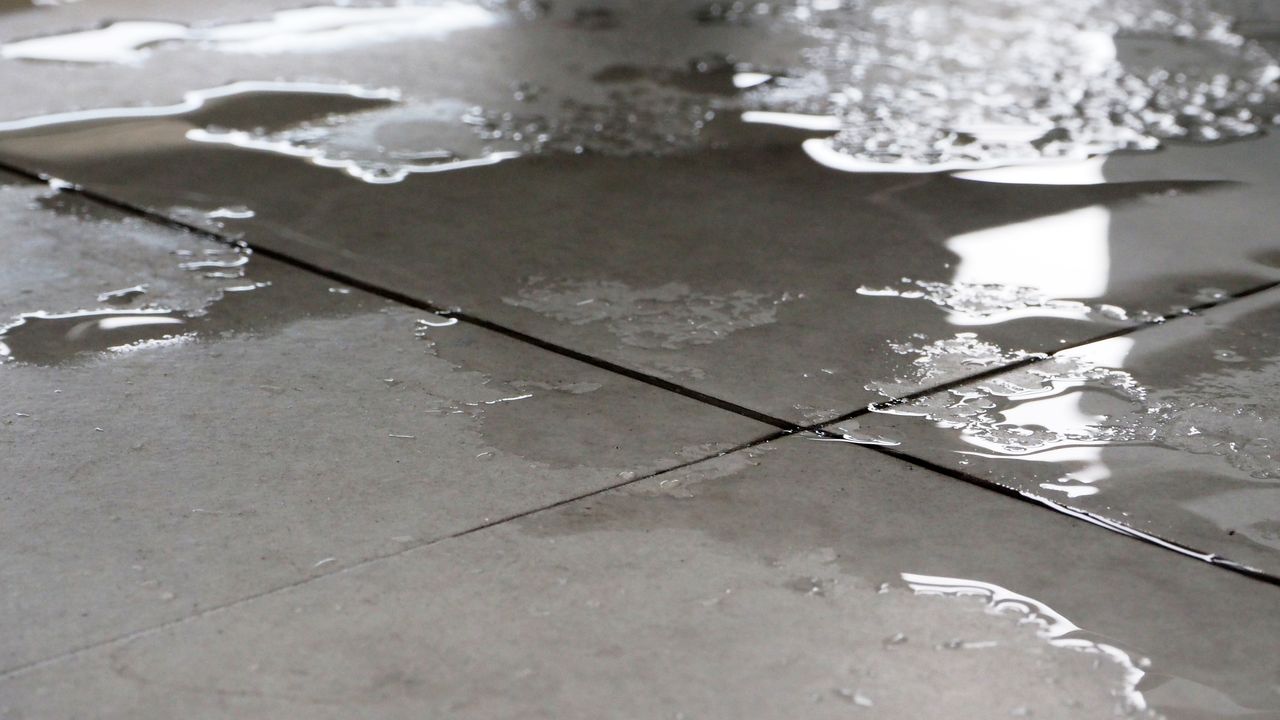
Moisture-Related Failures
Concrete slabs continuously release moisture through vapor transmission. Without proper moisture mitigation floor preparation, flooring systems can blister or delaminate.
Typical moisture-related problems include:
bubbling epoxy coatings
adhesive breakdown
tile debonding
mold growth under flooring systems
Moisture testing and mitigation systems are often required before installing coatings or resilient flooring.
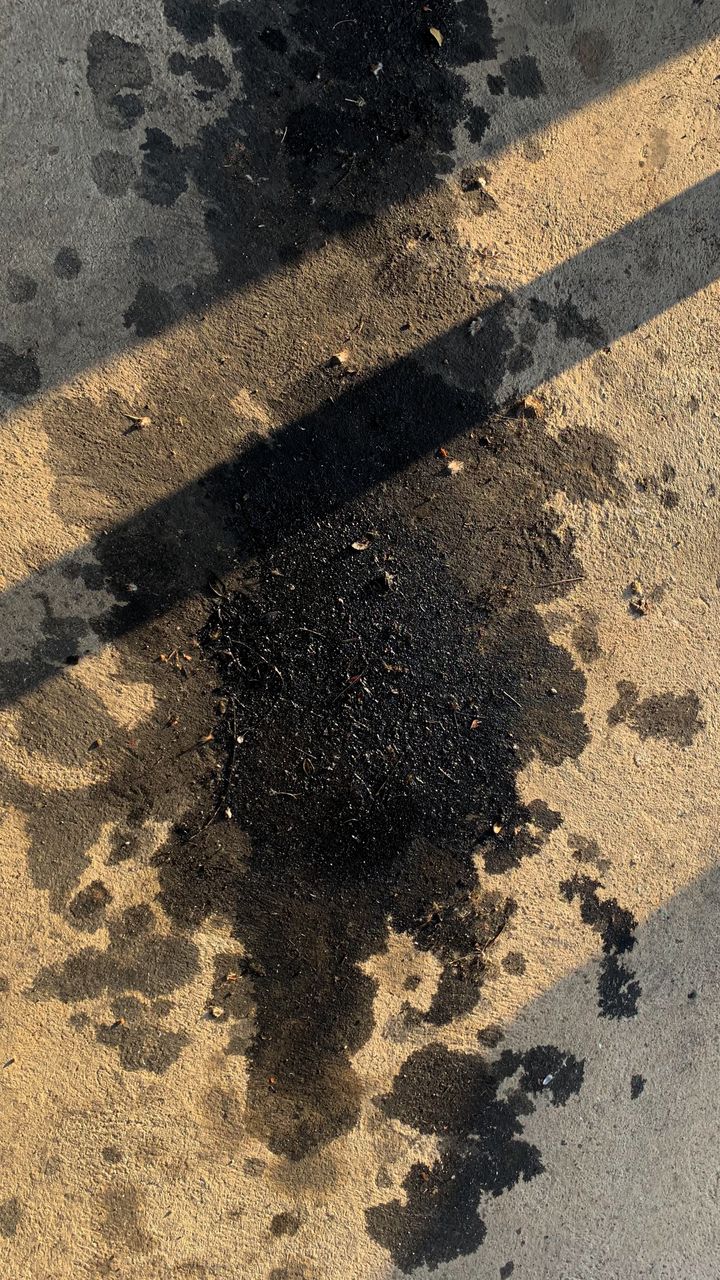
Contamination of the Concrete Surface
Many commercial facilities expose floors to oils, greases, chemicals, and construction debris. These contaminants can penetrate the concrete surface and interfere with bonding.
Surface preparation removes these materials and creates a clean substrate for flooring installation.
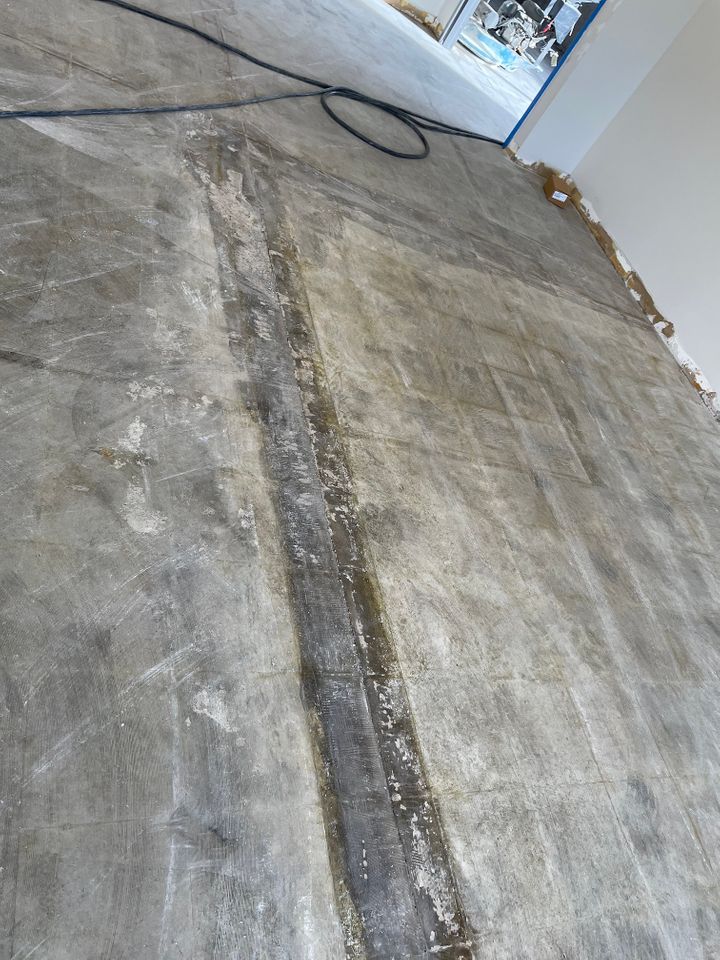
Improper Surface Profile
Most flooring systems require a specific Concrete Surface Profile (CSP) to achieve proper adhesion. This profile is created using specialized equipment such as shot blasters or grinders.
Without the correct surface profile:
coatings cannot anchor to the concrete
adhesives may fail prematurely
flooring systems may separate from the slab
Professional preparation ensures the correct CSP level for each flooring system
Structural Concrete Defects
Surface preparation also identifies and corrects structural problems such as:
cracks
spalling concrete
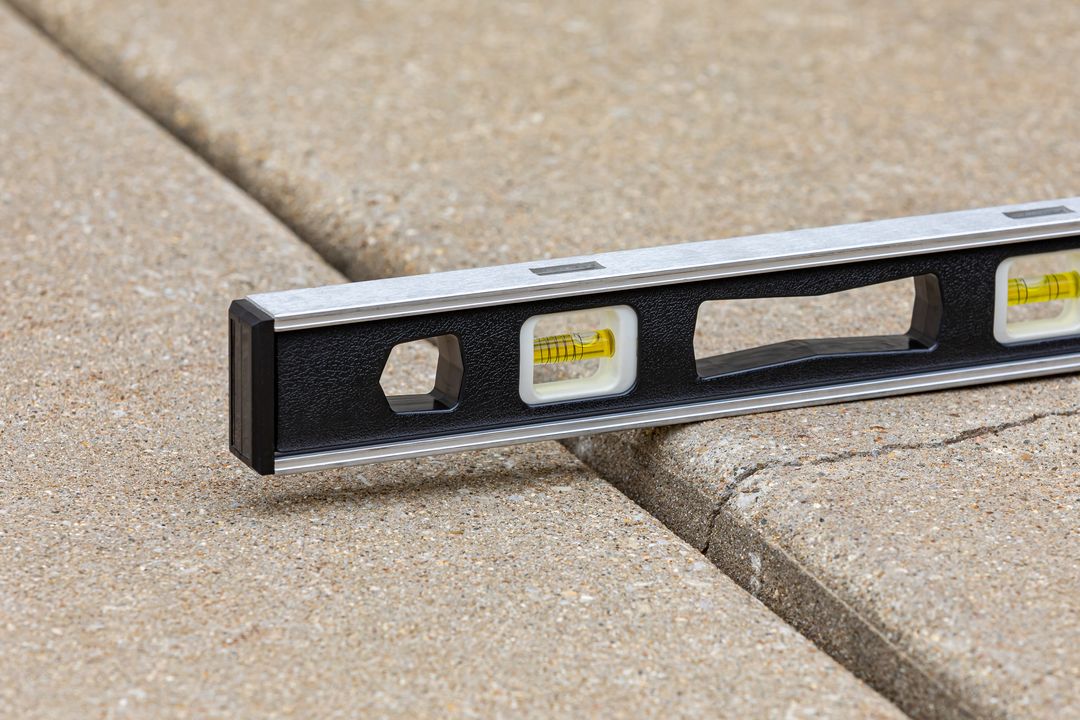
uneven slabs
previous coating failures
Addressing these issues during preparation prevents future flooring problems.
The Role of Professional Concrete Surface Preparation Contractors
Commercial flooring environments require far more than simple cleaning or sanding. Proper preparation involves specialized equipment, technical expertise, and testing procedures.
Professional commercial floor preparation contractors perform a multi-step process that typically includes:
Surface Evaluation
Before preparation begins, contractors evaluate the slab condition.
This may involve:
moisture vapor emission testing
concrete hardness testing
contamination analysis
evaluation of existing coatings
These tests determine the best preparation strategy.
Mechanical Surface Profiling
Mechanical preparation creates the texture required for flooring adhesion. Methods include shot blasting, grinding, and scarifying, depending on the floor condition.
Crack and Joint Repair
Concrete cracks and expansion joints must be repaired before installing new flooring systems to prevent future movement and failure.
Moisture Mitigation Systems
If excessive moisture is present in the slab, moisture mitigation systems may be installed before coatings or flooring systems are applied.
Dust-Controlled Preparation
Modern preparation equipment uses industrial vacuum systems to control silica dust and maintain safe indoor working conditions.
These procedures ensure the concrete surface is structurally sound and ready for flooring installation.